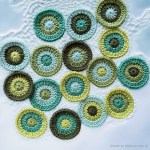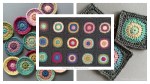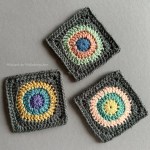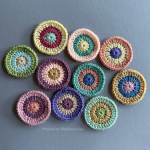
Testing the Wheel of What Square by A Yarn of Serendipity

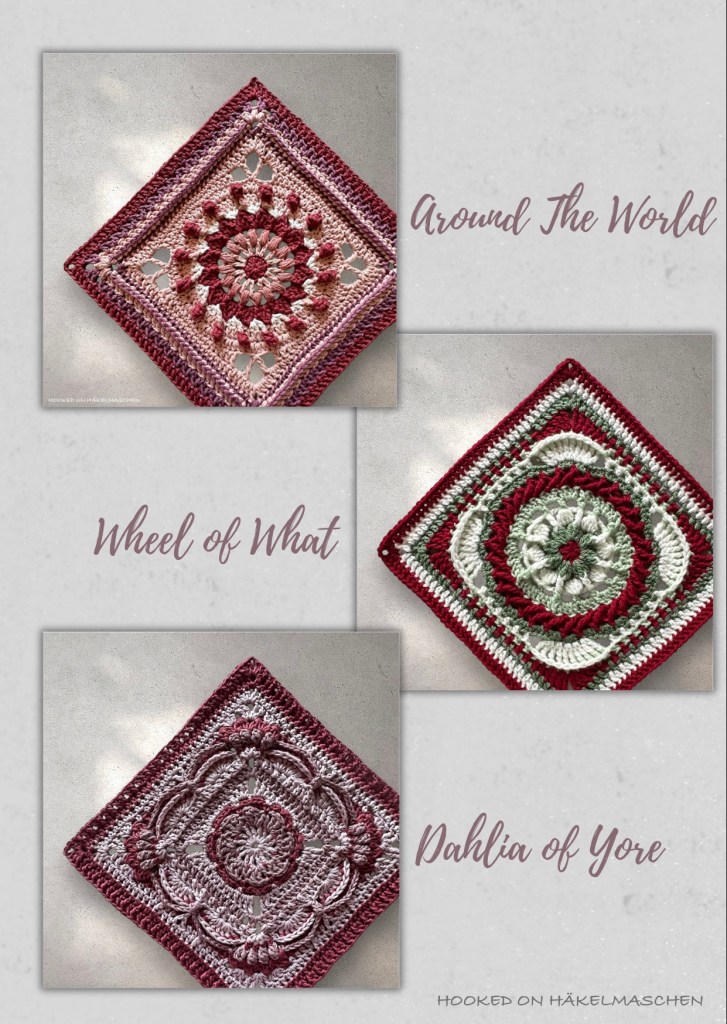
I had the pleasure of testing the Wheel of What Square by A Yarn of Serendipity – a beautifully textured Afghan block that’s easy to customize with colours and perfect for mix-and-match patchwork blankets.

A new design by Pam Knighton-Haener

A few months ago, back in August, I had the pleasure of testing another pattern for Pam Knighton-Haener of A Yarn of Serendipity. Pam has just released her beautiful new design: the Wheel of What Square.

The Wheel of What Square is another lovely Afghan block that perfectly complements all of Pam’s other designs. Like most of her squares, this one is designed in Aran / worsted weight yarn (#4). It measures about 11 or 12 inches, depending on whether a 4.5 mm or 5 mm crochet hook is used. All of Pam’s 11–12 inch squares share the same stitch count per side, so you can easily mix and match them to create a gorgeous patchwork blanket.

About the pattern

The pattern is rated as intermediate, but as always, Pam provides detailed, round-by-round photos that make it easy to follow along – even if you’re not an advanced crocheter.

Pam also includes two different colour versions in her pattern:

  • Version 1 uses four colours
  • Version 2 is worked in a single colour for a clean, classic look

My Test Version of the Wheel of What Square

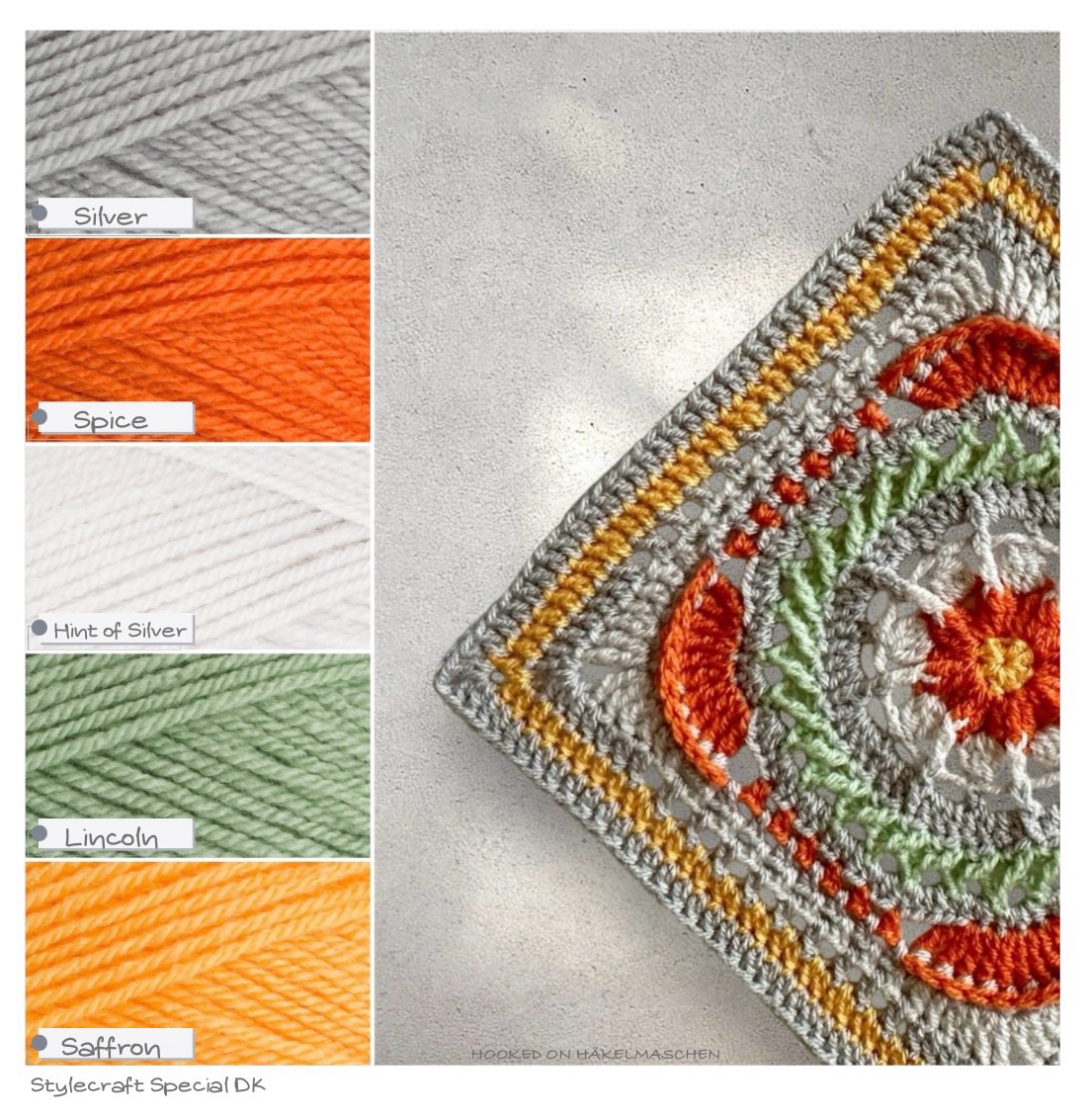
For my test version I used Stylecraft Special DK from my stash and a 4 mm hook.

I opted for some light, summery colours.

As I used five colours in my version, it was difficult to stick to Pam’s original colour scheme.
As so often, I created my own combination – the one you can see on the left in the photo.

My finished square measures about 25 cm (10 in). It’s a little smaller than Pam’s sample simply because I used DK / light worsted yarn (#3), while she used Aran / worsted weight yarn (#4).

I‘m totally happy with how it turned out!

A Spark of Inspiration

I have to confess, after my square was finished and blocked, it was still lying on my desk for quite a while — I just didn’t get around to taking pictures. But seeing it every day sparked a new idea in my mind:

Every time I looked at it, I thought “This design would look amazing in Christmas colours!”

So of course, I had to try it!

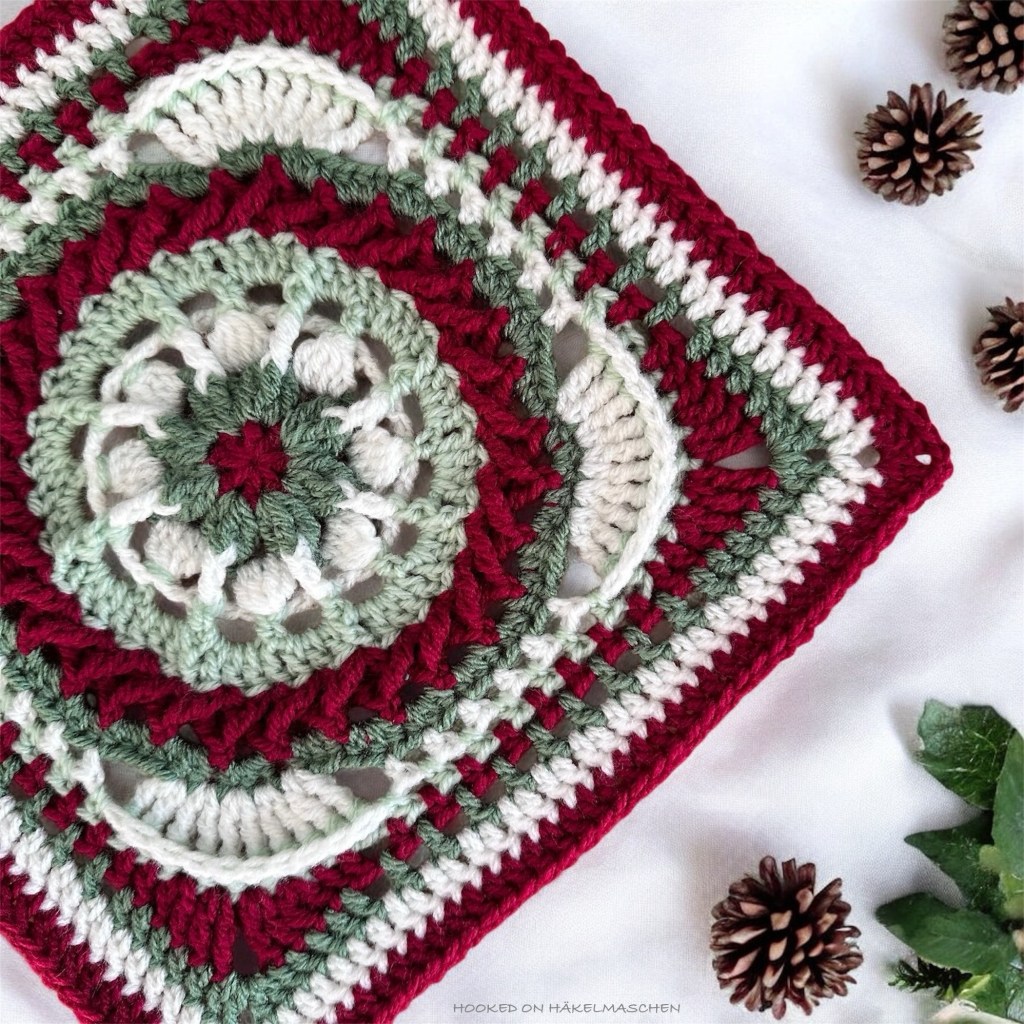
My Wheel of What Christmas Version

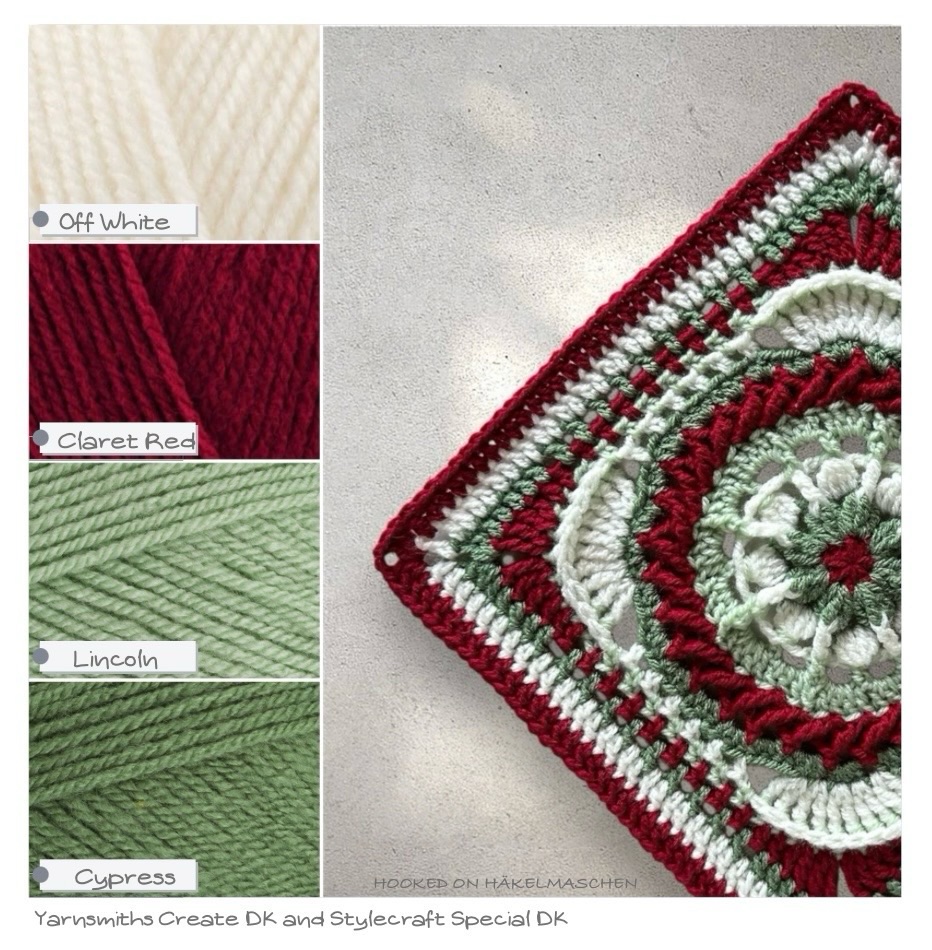
For my Christmas version, I again used yarn from my stash – a mix of Stylecraft Special DK and Yarnsmiths Create DK, with the same 4 mm hook.

This time, I followed Pam’s Colourway 1, but replaced her shades with my own festive choices:

  • Colour A: 3090 Claret Red – Yarnsmiths Create DK
  • Colour B: 1824 Cypress – Stylecraft Special DK
  • Colour C: 3045 Off White – Yarnsmiths Create DK
  • Colour D: 1834 Lincoln – Stylecraft Special DK

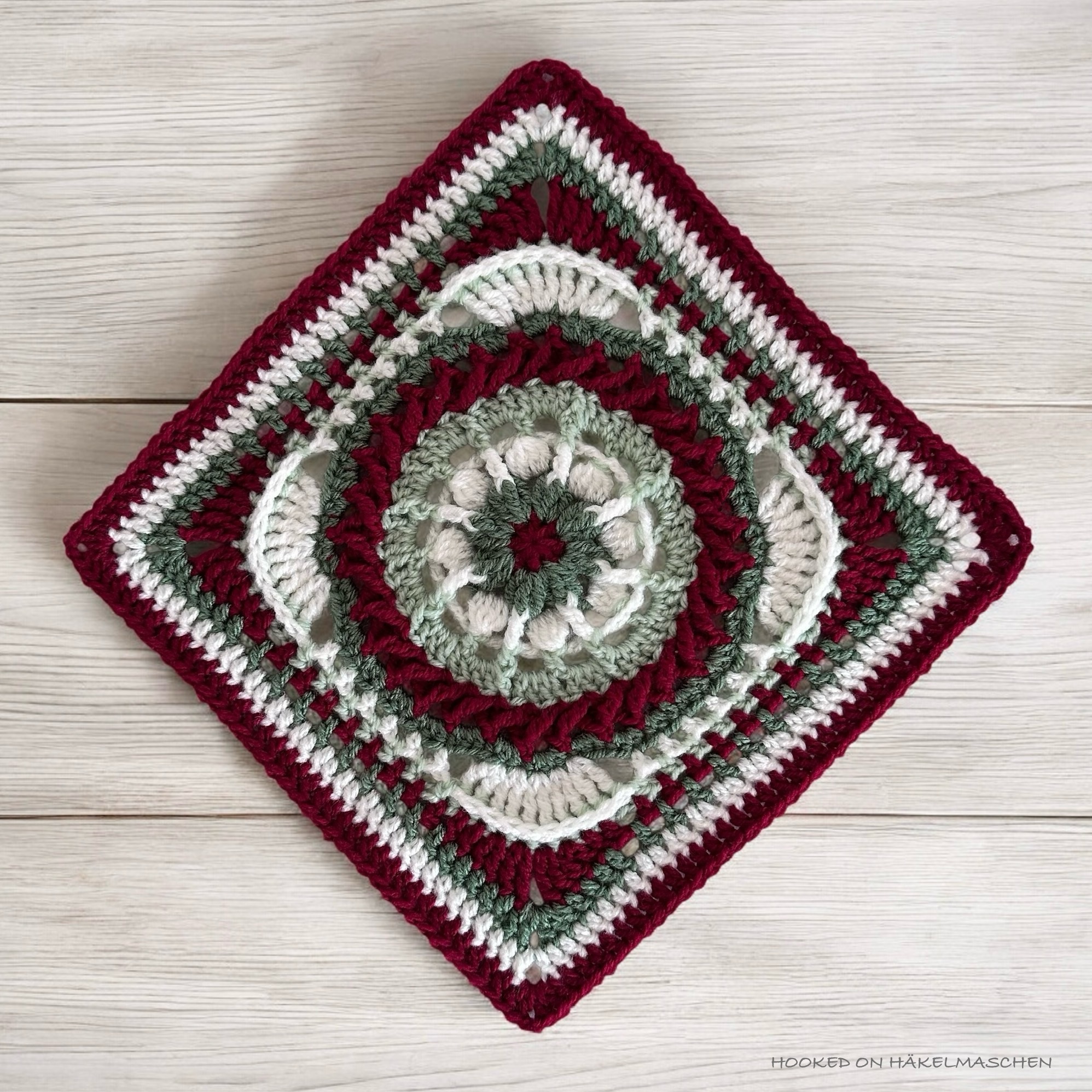
And the result?

I absolutely love it!

The colours give the design such a warm and festive touch – perfect for the holiday season.

Final Thoughts

The Wheel of What Square is another beautifully written and well-thought-out design from Pam. It’s fun to crochet, looks amazing in any colour combination, and fits perfectly with her other squares.

If you’d like to try the Wheel of What Square yourself, you can find Pam’s pattern on Ravelry.

Falling for Crochet – My Autumn-Inspired Makes

Autumn has finally arrived, and nature is showing its most beautiful colours! 🍂 Inspired by the golden leaves outside, I crocheted some colourful decorations for my home – easy, fun and perfect for cosy autumn days.

Autumn has finally arrived in Germany. The temperatures have dropped, days get shorter and the trees have coloured their leaves in shades of yellow, orange and red.

I love this time of the year!

The beautiful colours of nature just have inspired me to make some autumn decorations. Just to bring a bit of autumn indoors.

At first I had the idea to browse Ravelry and look for some patterns there. Maybe little leaves or pumpkins. But then I remembered a book that I got a while ago: Crochet Collage Garden by Chris Norrington.

Do you know her work? She creates beautiful collages of flowers and leaves – all in crochet. You can find her under the name @chris.made.this on Instagram.

In 2023 she published a book with some of her beautiful collages. Of course there are corresponding patterns for each flower, each stem and each leaf. Both in written instructions and as a crochet diagram.

I assume the book is available in many places.

I bought my version – the Kindle edition – on Amazon.

As you may know, I prefer to work according to English pattern. So of course I got the English version. But there is also a German translation available, as well as many other languages.

As I said, I got this book a while ago. And although I have leafed through it many times, I have never found the time to work through it. Until now!

I didn’t even remember how many different leaves are in it!

Finally, I managed to crochet some of them!

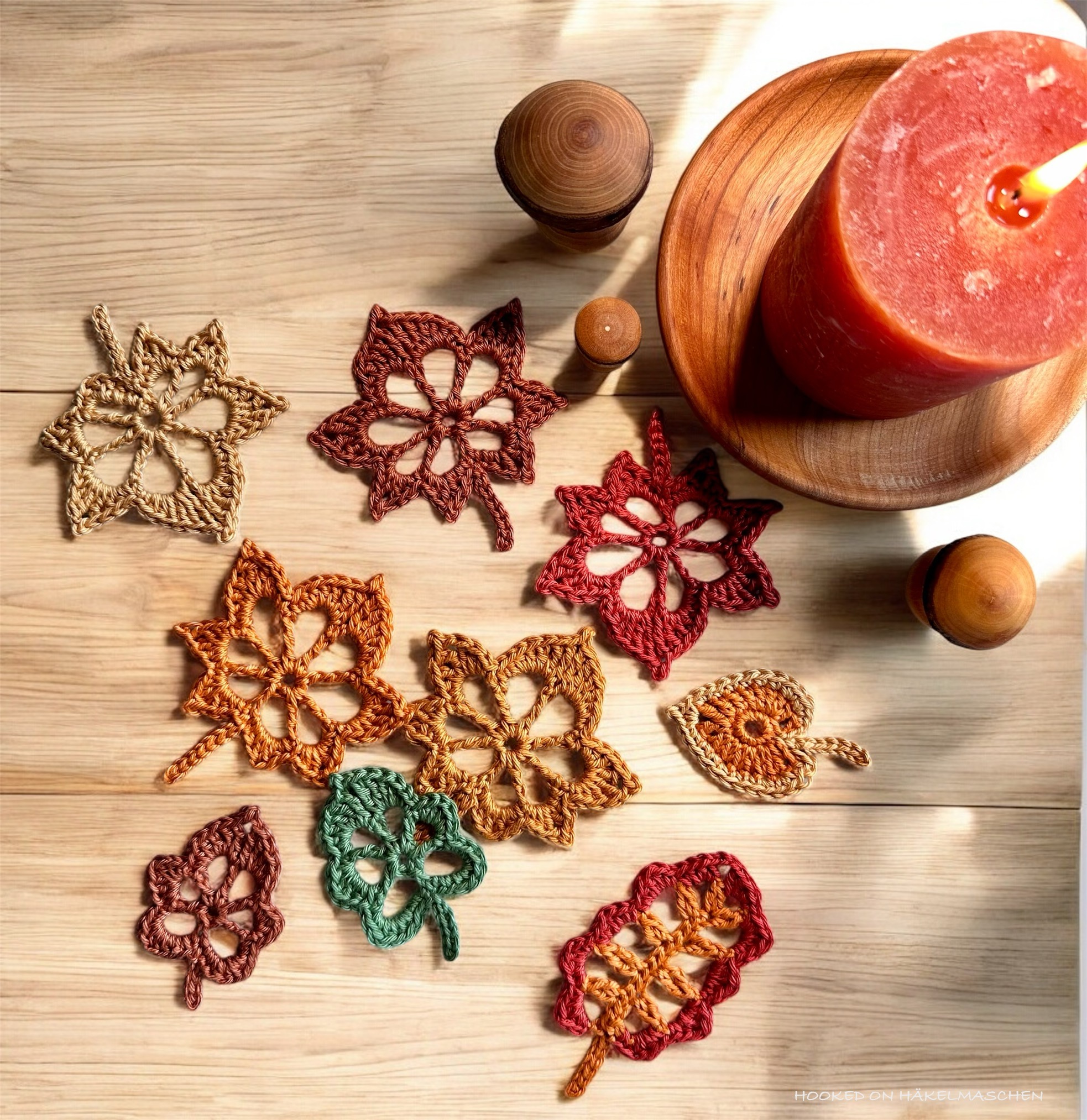
My collection of leaves

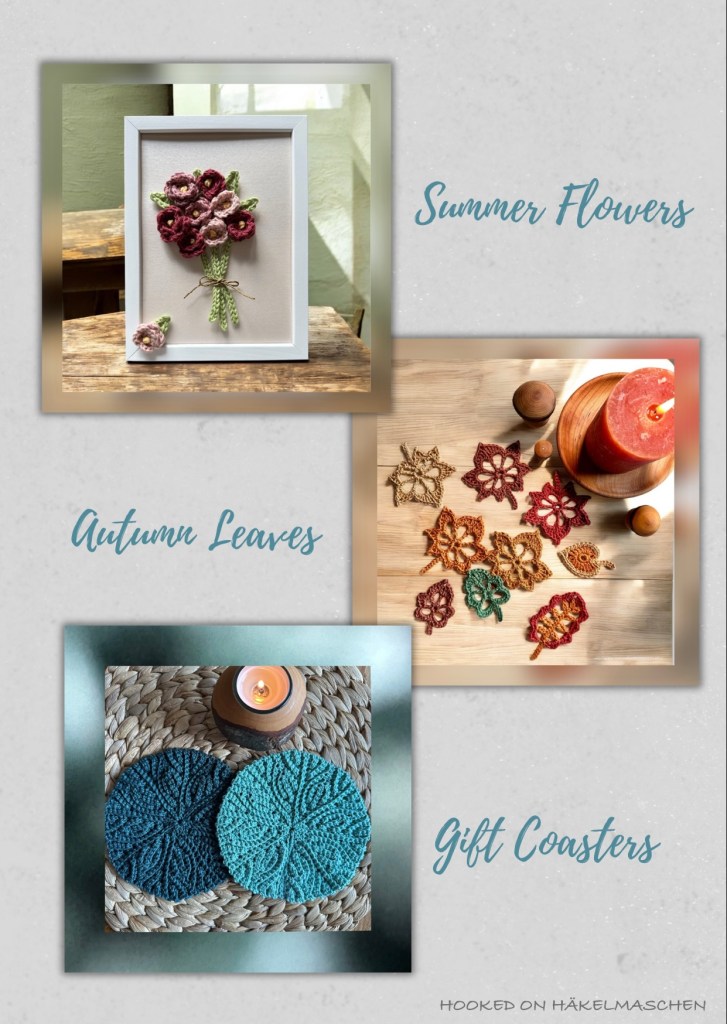
Here’s an overview of the patterns I’ve made so far. However, there are still many in the book that are waiting to be reworked.

All of these leaves were quick and easy to make. However, I had to be quite careful: Since Chris lives in the UK, the book is written in UK terms. Personally, I’m more used to US terms. Therefore, I often had to think twice before crocheting a stitch. The diagrams were really helpful to me!

My yarn and colours

I used some yarn from my stash. A mixture of Limone from Schneller + Stahl and Catania from Schachenmayr. Both are 100 % mercerised cotton and have a yardage of 125 m / 50 g. I used a 2.5 mm hook for both.

A few autumnal impressions

Have you ever tried crocheting leaves or autumn decorations? I’d love to see your creations – feel free to share them in the comments or tag me on Instagram!

Have a lovely time 💕

Ein kleiner Nachtrag in meiner Muttersprache:

Der Herbst ist endlich da – und ich liebe diese gemütliche Jahreszeit! 🍂 Die bunten Blätter draußen haben mich inspiriert, ein paar kleine Häkelblätter und Dekorationen für mein Zuhause zu machen. Schnell gemacht, farbenfroh und einfach herbstlich schön – perfekt, um ein bisschen Gemütlichkeit ins Wohnzimmer zu zaubern. Das Buch, aus dem ich die Anleitungen für diese hübschen Blätter habe, gibt es auch in einer deutschen Übersetzung!

How I Organize My Crochet Projects with a Crochet Journal

Stay organized with a crochet journal! Track hooks, yarn, and progress while keeping all your crochet projects in one place.

The cover photo was created by WordPress AI

Effective Crochet Management: My Journey

I’m usually not a very organized person – sigh. And since I always need some variety, this definitely shows in my crochet projects. I often have several projects going at the same time.

Are you the same?

And do you always remember which hook or needle size you used for a special project, or which row or round you’re on? Well, I usually didn’t. When I came back to crochet I pretty quickly realized how important it is to keep track of my projects.

But it took some time until I discovered that a crochet journal (or crochet project tracker) can make all the difference.

Getting Started: My First Attempts to Organize Crochet Projects

At first – over 10 years ago – I simply noted the hook or needle size and the yarn used on my Ravelry project page. At this time I also used a printed copy of the pattern to make some notes. It worked quite well – for a while.

Over time, however, I printed fewer and fewer documents and switched more and more to my tablet. That’s when I started using a PDF reader – PDF Expert by Readdle. (I can definitely recommend it – in case you use Apple products)

From Ravelry to Digital Notes – My Early Crochet Tracking

My version of PDF Expert allows me to make marks and notes in a document. So, it was perfect to tick off the progress directly in a digital copy of the pattern. Or just make some short notes about the changes I made.

With PDF Expert, I also started to store all my purchased patterns in one place, in the cloud – including the ones from Ravelry. Believe me, it is much easier to find something when everything is together. My father always said that, and today I have to agree with him.

Why I Needed More Than Just Ravelry and a PDF App

When I started testing crochet patterns, however, that wasn’t enough anymore.

Testing isn’t just about recording your own progress. Sometimes you have to mark mistakes and note corrections. Besides it is helpful to keep track of details like yarn used, colours, or time spent. People love asking those things later when you show your finished work on social media!

For larger, more extensive projects, I also found it useful to record some basic information about the pattern. Such as assignment of colours, stitch counts, number of repeats or total yarn usage. Looking for that often meant scrolling back and forth or switching between documents. This was simply too time-consuming.

My Ravelry and my pdf app were no longer sufficient for this.

Pin it for later

The Start of My Own Crochet Journal

At first, I was looking for other apps that would allow me to record extensive notes on my projects. Unfortunately, none really met all my needs. The focus – at least at that time – was more on counting rows.

So I decided to create my own worksheet in Numbers (Excel or Google Sheets work just as well).

What to include in a crochet project tracker?

I took everything into account that was important to me:

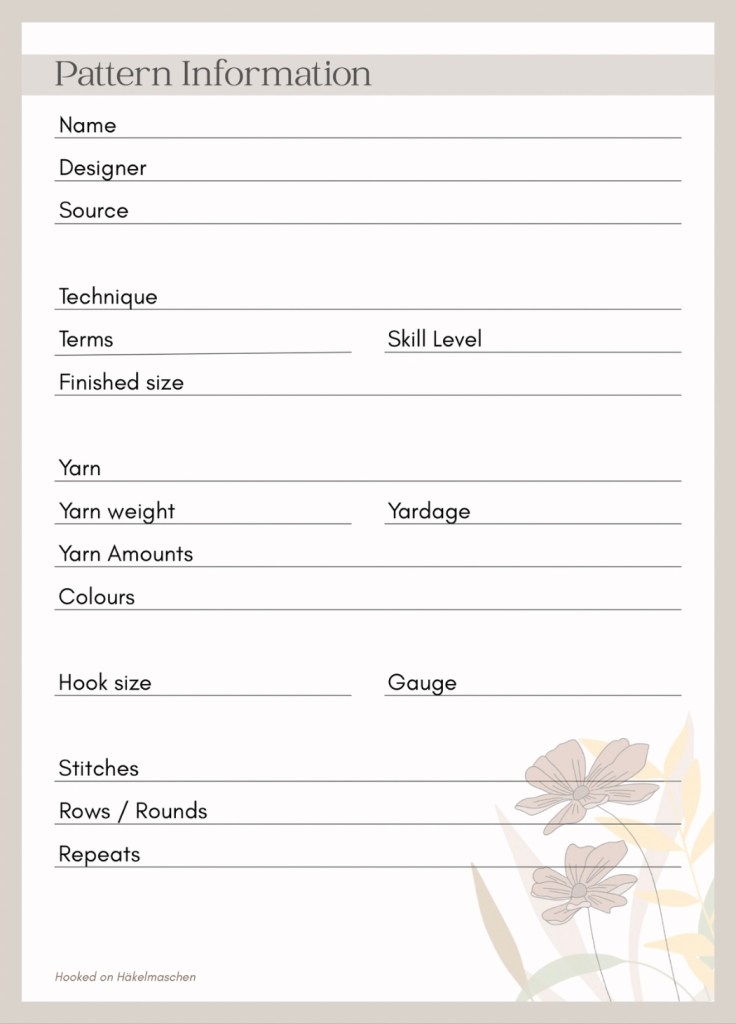
  • Basic pattern information about
    • the designer and where I got the pattern
    • Special techniques that are used (such as overlay or inset mosaic, Tapestry or Tunisian crochet)
    • Wether the pattern is written in US or UK terms (very important)
    • Original yarn and colours used, including yarn amounts, hook size and gauge
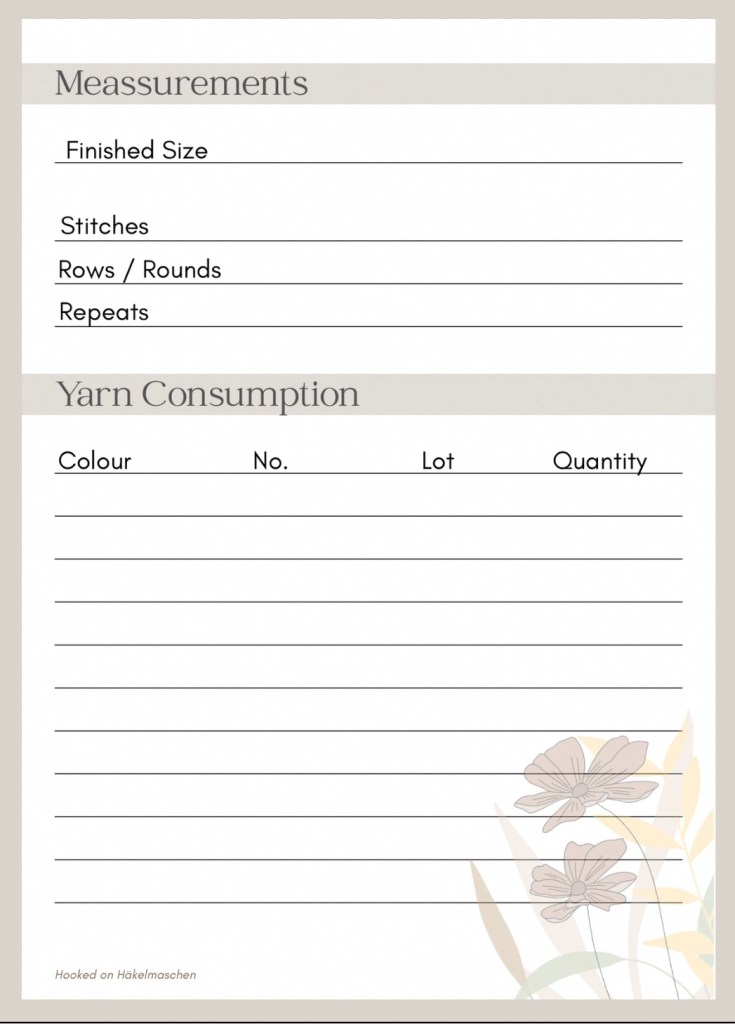
    • Measurements like final size, stitch counts, number of repeats, rows or rounds in total
  • Information about my own, personal, version
    • Like, the yarn I used, including the hook size
    • Details about my colours
    • Finished meassurements
    • Yarn consumption
  • A sheet to take notes
  • And a sheet to document the progress of the project

Perfect! – It worked fantastic!

The only thing that bothered me was the constant switching between pdf (pattern) and spreadsheet (notes) to make the necessary entries – using the keyboard.

Using a keyboard feels kind of strange when you are crocheting …

Designing My Crochet Journal in Canva

Finally this led me to design a crochet journal in Canva (another one of my favorite apps).
I based it on all the contents that were already included in my Numbers worksheet.

I have also added a sheet for photos. And created a way to quickly sketch something. This visualisation often helps me to understand the instructions better, especially with complicated patterns.

And this is the result:

I exported the Canva file as pdf and saved it as a master. Now I just have to duplicate the file and rename it when I start a new project.

I love to scribble around in it with my pen and quickly jot something down. That feels much better than a keyboard- at least for me.

I use this journal whether I’m testing a pattern or just working on something for myself.

The file can, of course, also be printed out or imported into a notes app (if the app supports file imports).

Final Thoughts on Using a Crochet Journal

A crochet journal is the perfect way to organize crochet projects without feeling overwhelmed. I can note down the yarn, the hook size, my progress, and even add photos or sketches.

By consistently keeping notes, I can easily look things up later if a question comes up. I always know which yarn and colours I used and how much time I spent.

Tell me I’m not organized!

If you are interested in my journal you can download a copy here

So, that’s my way of keeping my crochet projects under control. How do you keep track of yours?

Celebrate Granny Square Day 2025 with my new pattern – Simply Petals

Today is Granny Square Day! And, this year I thought about it in time!

I am a little proud! Normally it seems that I tend to completely forget about Granny Square Day, only remembering it when I see all the lovely posts on social media.

But this year I designed another small square especially for this day – just in time!

If you’re not familiar with the Granny Square Day— what it is, what it means, and its history, I made a quick Google search about it. Here is an extract from the Google AI summary:

„Granny Square Day is an annual, global celebration of the crochet granny square, held on August 15th. It’s a day where crocheters worldwide share their granny square creations online, particularly on Instagram, to form a virtual blanket. The event was started by Susan Regalia in 2014 and later taken over by Simply Crochet Magazine. It’s a chance to showcase creativity, connect with other crocheters, and contribute to a larger, collaboration.“ (copied from Google).

I’m excited to see what beautiful creations there are this year!

My contribution is

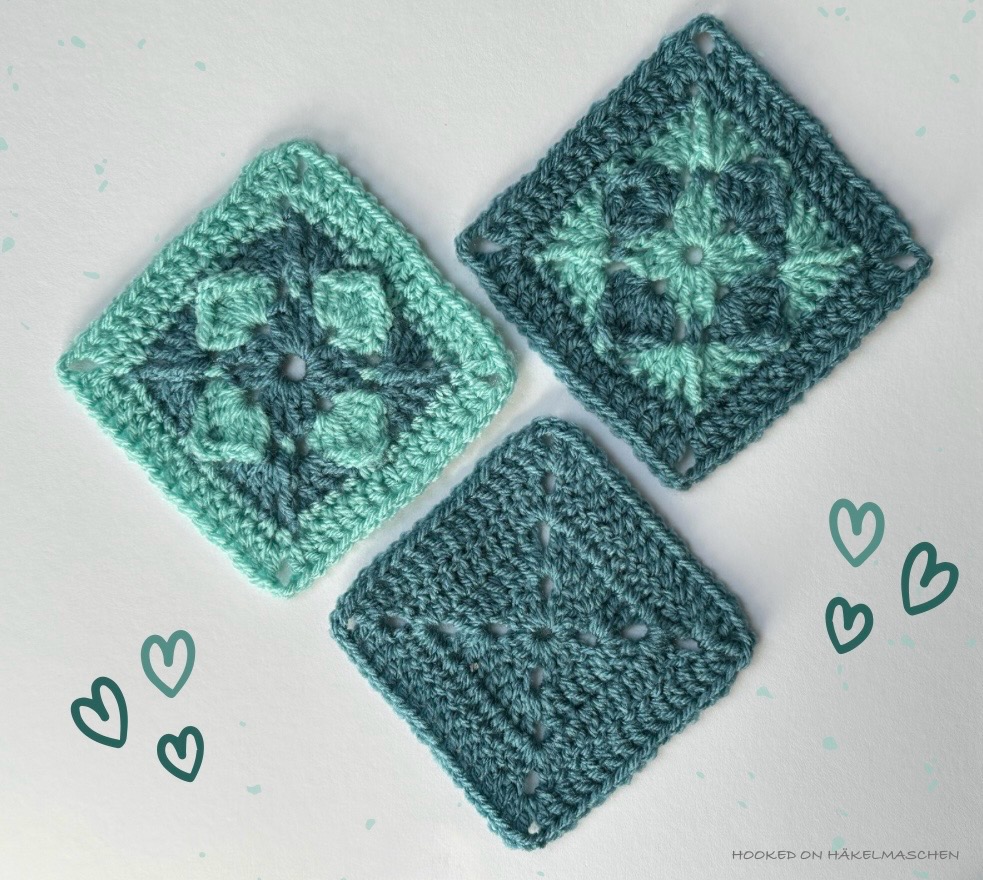
Simply Petals

a reminiscent of stylised flower petals. It is easy to crochet and perfect for a quick, fun project.

My samples are made with DK / light worsted yarn (#3) and a 4.0 mm hook. The finished squares measure about 10 cm (4 in).

I chose just two colours, but you can, of course, use as many as you like!

My colour combination:

# 1722 – Storm Blue and
# 1842 Spearmint
(both Stylecraft Special DK)

The pattern is written in US terms and uses mainly basic stitches: chain, single crochet, double crochet and treble crochet. In addition, it incorporates back post single crochet and front post treble crochet. This makes it perfect for those who enjoy crocheting but prefer patterns without too much complexity. I also think it’s ideal for adventurous beginners with a little experience.

Each square is worked in 5 rounds and has 15 stitches per side, making it easy to combine with a simple, plain square in double crochet.

I hope you like it as much as I do!
You can download the free pattern here

And, since it is not included in the pattern, here a few tips for beginners:

  • Some of the chain spaces can be difficult to identify in the following round. So it can be helpful to mark at least some of them with a stitch marker. Here my tips
  • Round 2 – place a stitch marker in at least one of the chain spaces that is crocheted before a single crochet. This makes it easier to identify the starting point of round 3 and the placement of the first group of double crochet. (There is no need to mark the chain spaces besides the trebles as you won’t work in these later)
  • Round 3 – put at least a marker in a chain space worked directly after a front post treble. This will mark the start of round 4. Note: in round 4 you will be working in all chain spaces
  • Round 4 – I would suggest placing a stitch marker at least in the chain spaces before and after the single crochet that is worked into the front post treble. As in round 4, all chain spaces are worked in round 5
  • Depending on the yarn used and your personal tension the square might look a bit wonky at the end of round 3. Just smooth it a little with your fingers, the problem should be solved after round 4
  • You can find explanations of how to work all the stitches used here.

I am curious about all your creations with Simply Petals!
Please use #SimplyPetals if you share them on social media.

Have fun and happy hooking 💕

Discover the “Around the World Square” Afghan Pattern

Some weeks ago I had the pleasure to test another design by Pam Knighton-Haener from A Yarn of Serendipity.
The Around the World Square is another lovely Afghan square with an intermediate skill level. As almost always in Pam’s patterns there are also a few special stitches this time. But everything is well explained and there are plenty of detailed pictures to help. I therefore think that even an ambitious beginner can work the pattern.

The size and the number of stitches per side, of course, fit perfectly with Pam’s other squares.
The pattern is available on Ravelry, and if you hurry, you can still get a 30% discount until the end of July. The discount also applies to all other patterns by Pam. It’s worth a look!

For my version I used Hobbii Rainbow Cotton 8/6 from my stash.
It is 100 % cotton and has 105 m / 50 g (115 yards / 1.76 ounces).
Hobbii classifies it as a fine/sports weight yarn. I personally find it to be more on the thicker side, almost a DK weight. I have therefore mostly use a 3.75 or 4.0 mm hook to work with it. This time I decided on my 4.0 mm Clover Amour hook and I am happy with the result.

My finished square is about 26 cm (10.5 in)

These are my colours.

Unfortunately, by now, some of them are discontinued in the 8/6 quality.

Pam offers two different colour schemes in her pattern. One uses seven colours and the other uses five.

I decided on a version with 5 colours. At first, however, I wasn’t so sure whether my colours would really go together. That’s why I didn’t simply replace the colours of the five-colour version with my own. I have once again created my individual colour placement. Even though I had doubts at first, I think the colours match quite well.

I have listed my colour placement here.

And this is the result. I’m really happy with it!

Happy Circles II – A new pattern

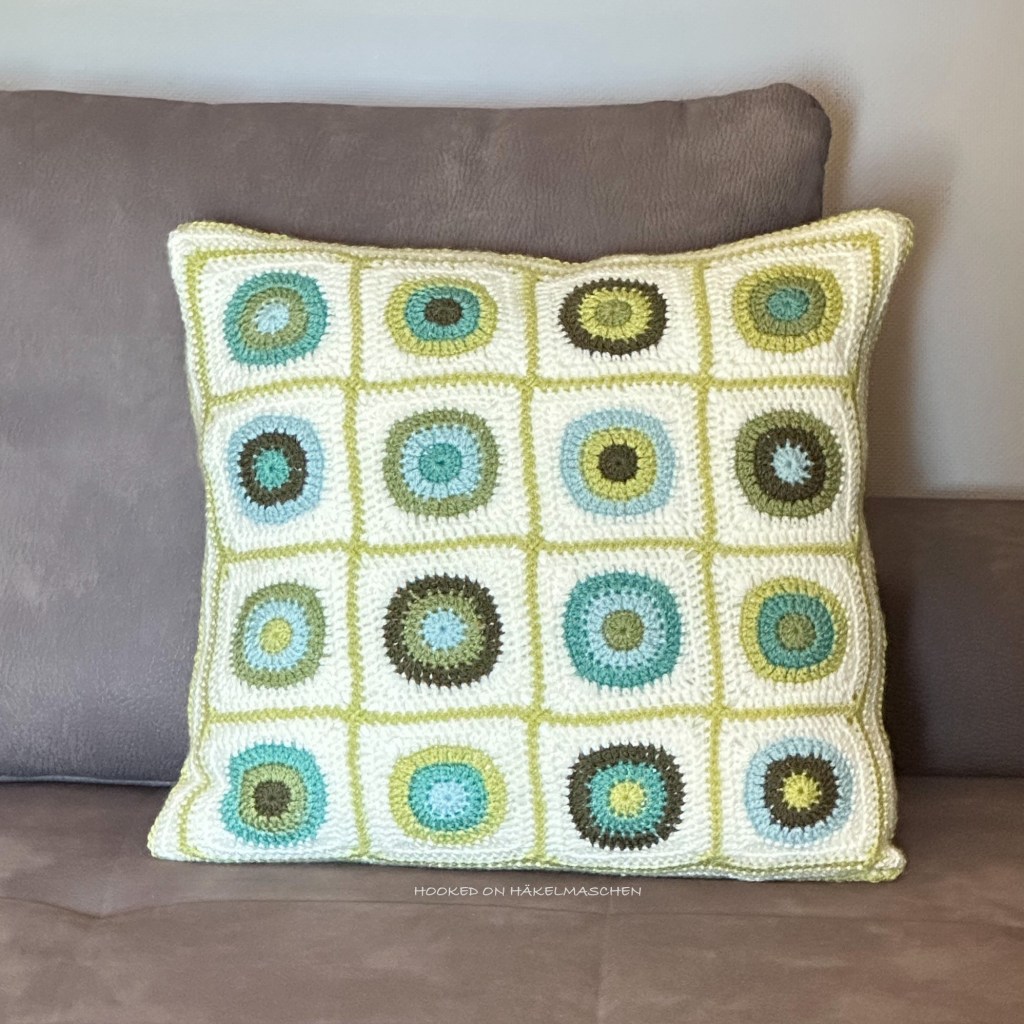
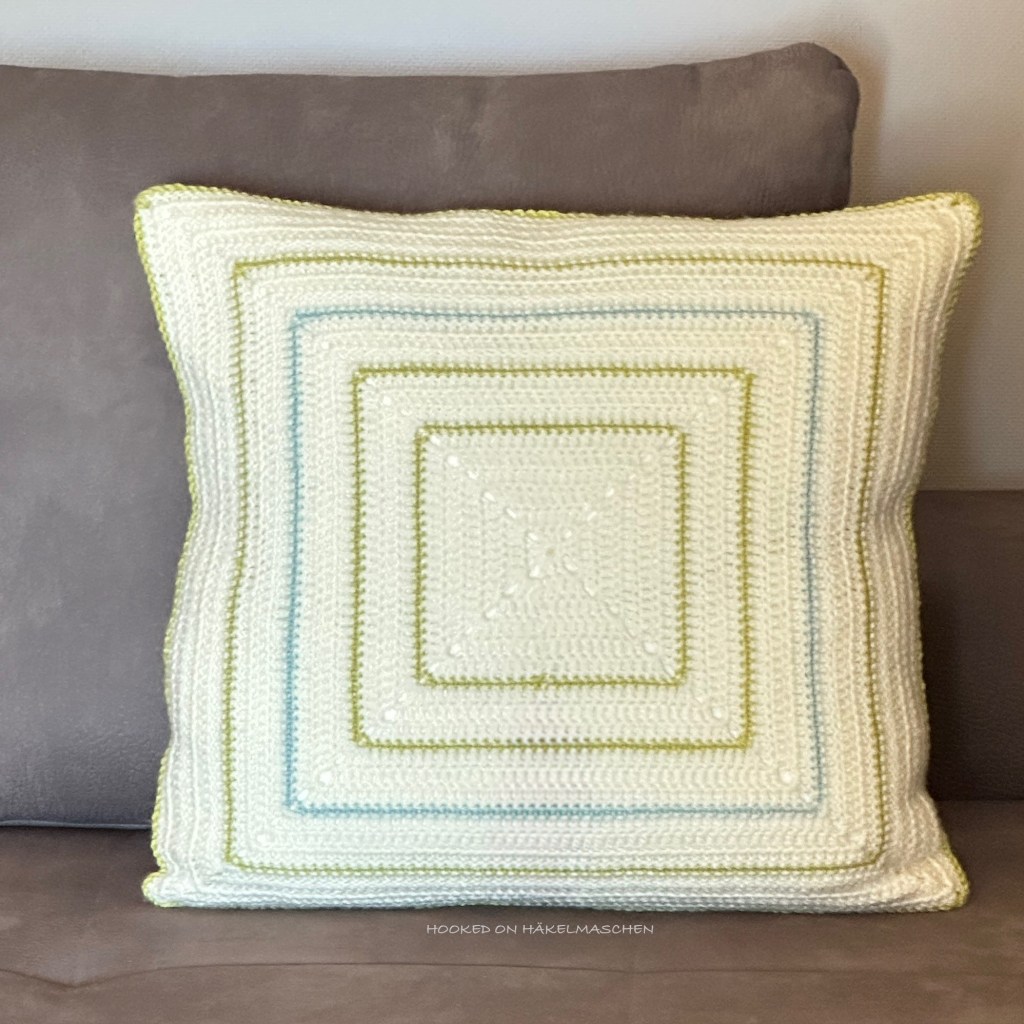
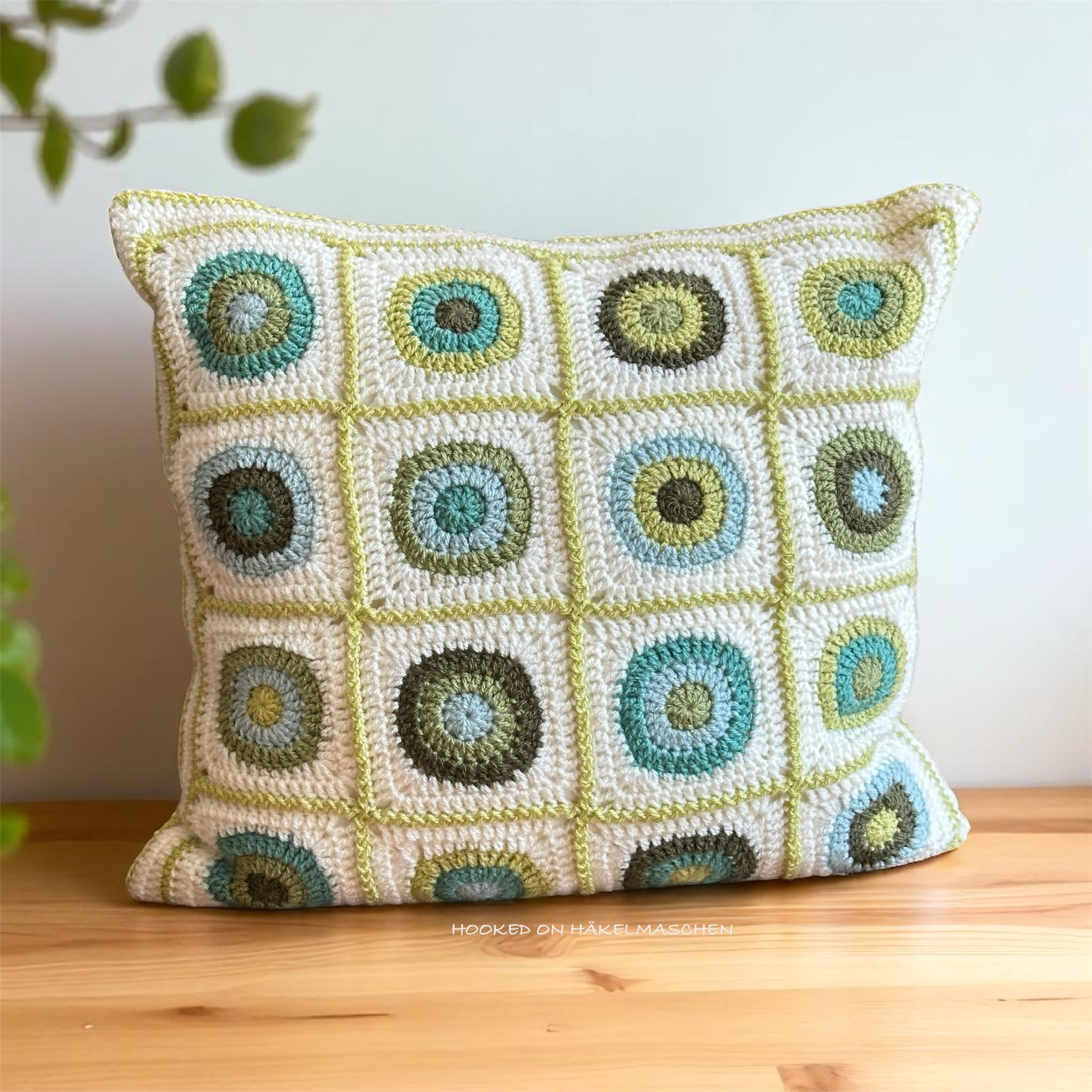
YAY – my Happy Circles cushion cover is finally finished! – Okay, to be honest, it has been for over a week now.
Unfortunately, it took me a very long time to write the pattern. Like other countries in Europe, we had a terrible heatwave here. The temperatures climbed up to 40 degrees Celsius. And this was definitely too hot for my brain. I found it hard to concentrate on anything.

But now the time has come. Everything is written down and hopefully well explained!

You can download the free pattern here

If you have any questions about the pattern (or spot any mistakes), simply email me. You can either use the contact form or email me directly under hookedonhakelmaschen@gmail.com

The Design

The cushion cover is designed for a 50 x 50 cm (20 x 20 inch) cushion. The finished size is about 46 x 46 cm (18 x 18 in).
With the size I followed an advice I found on the internet. It said that to make a square cushion look nice and plump, the cover should be about 5 cm (2 in) smaller than the cushion.
At first I was unsure whether this would really work. And when I finally put the cushion into the cover to close the last seam, I was pretty sure at first that it had become too small. But everything turned out well in the end. I am totally happy with the result!

The front part of the cover is made up of 16 squares, arranged in a 4 x 4 layout. Each square measures about 10 x 10 cm (4 x 4 in).
For the back, I opted for a simple square. Mainly single-coloured, with a few small contrasts.

The size is easy to adjust by enlarging or reducing the border of the front piece. The rounds for the back must then of course be adjusted accordingly.

My Colours and Colour Placement

My colour choice was inspired by a cushion cover I got from IKEA some years ago.

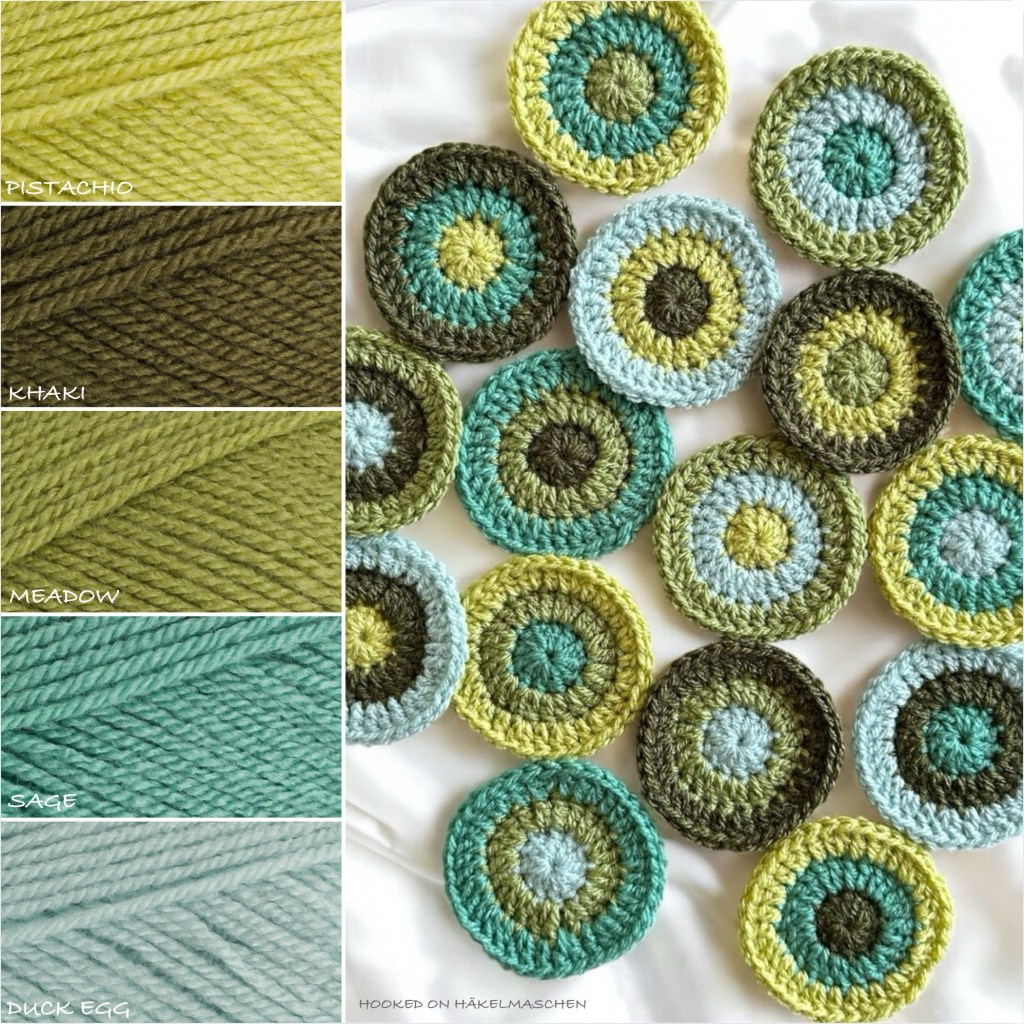
I selected five colours from my Stylecraft Special DK stash focusing on yellow-green and blue-green tones.

Originally, I wanted to create a random colour scheme for the design again. This time, however, I failed with the use of the random generator. I didn’t like the results, so I worked out something of my own. The outcome is not really random, but has a similar effect. You can read all about it in one of my earlier posts.

Of course, you can also use different yarns and/or different colours. But please bear in mind that using a different yarn may affect the size of the finished cushion. It may also change the quantity of yarn required.

I am totally happy with the result! And I hope you like it just as much!

Related Posts

Happy Circles II – A Quick Update

Actually, I wanted to have finished my Happy Circles cushion cover a long time ago! But sometimes life turns out differently than you might think. 

Everything had started out so nicely …

End of May is my birthday, so we travelled to the Black Forest for about 10 days. Even though the weather wasn’t so good, we really enjoyed our time. I love the Black Forest, especially at this time of year! Due to the mountainous landscape and the altitude, there is relatively little agriculture but all the more livestock breeding with cows, sheep and goats. The meadows just bloom wonderfully at this time of year! We had beautiful long walks and a very relaxing time!

Here some

Holiday impressions

Of course, I also had my crochet stuff with me (and a little bit of knitting). But I have to admit that I didn’t get as far with it as I had intended.
Towards the end of the holiday I was kind of tired and at the same time my bones were aching … When we got home, I realised that I had contracted a COVID infection. Unfortunately, that put me out of action for another 10 days …

I’m starting to feel better now, even if my voice is still a bit raspy and I’m still coughing – at least my brain is working again!!

My crochet progress

Unfortunately there’s not much news to report about my cushion cover. Let alone a final photo and / or a pattern.

At least I have finished the front panel. All my squares are joined and I also added a small border.

still unblocked …

… the front side

The finished size of the panel is 46 x 46 cm (about 18 x 18 inch).
I would like to use the cover for a 50 x 50 cm (20 in) cushion. I read somewhere that the cover for a square cushion should be about 5 cm (2 in) smaller than the insert to ensure a nice fit. Until now, I have always made the cushion covers to fit exactly. I then often had the problem that they tended to look too big, especially at the corners. So I thought I’d give the smaller size a try. I only hope that it will work out well! Otherwise I will have to start over.

At the moment I’m working on the back. I opted for a simple square. Crocheted in rounds with double crochet. I still have two or three rounds to go, then the joining can begin.

Work in progress …

… the back side


I can’t wait to see how it turns out …

I hope to finish it in the course of next week. Then it’s time to write down the pattern!

Have a lovely weekend 💕

Edit 06.07.2025:
I’ve just stumbled over my notes: I was wrong about the size of the cushion cover. It should not be 10 % smaller as I had originally written, but 5 cm (2 in). I have just corrected this – sorry!

Happy Circles II – My new experiment in random colour placement

I’m working on a new project – a cushion cover!
I’m finally trying out a colour combination that I’ve wanted to try for a long time. The inspiration comes from a cushion I have from IKEA. It is a mixture of green and blue tones, with a yellow undertone in the green shades. And again I wanted to try a random colour placement.

I’m still a long way from having finished it. But so far I like it so much that I wanted to show it off!

My Colours

Stylecraft Special DK

1822 – Pistachio
1027 – Khaki
1065 – Meadow
1725 – Sage
1820 – Duck Egg

I opted for a similar design to the Happy Circles wall hangings I made last year. Do you remember them? You can find the free pattern here or on Ravelry.

Back then I used 15 different colours and created the random arrangement of the colours with a random generator. And I was totally happy with the result!

If you are interested in the process of my colour placement you will find all information in this post.

Random colour placement

After the random colour placement worked so well last year, I wanted to use the same method for the cushion cover.

Well…

Using a random generator

I have to admit that using a random generator didn’t work out so well this time.

I guess it has to do with how a randomiser works. This is a very complex topic – at least that’s how it seems to me. And that’s why I don’t want to go into it any further here. But if you are interested in this topic you can read about it on the Random.org website. I used their list generator for my purposes.

Anyhow, as a result of the random generator, my colours were – of course – not evenly distributed. By this I mean that the colours used occurred in different numbers. No matter how often or in what order I entered the colours, one colour always appeared very often and the others very little.

So, using only 5 colours therefore led to an imbalance – at least in my eyes.

I think when more colours are used, this will not even be noticeable. And with a larger project, such as a blanket, it can even look very nice if one colour is more dominant than the others.

However, I didn’t like it at all on the relatively small cushion cover.

Creating my own randomness

After several attempts I decided to create my own ‘randomness’ with a more balanced distribution of colours.

To do this, I made a table in which I first entered the colours for the first round of my circles. The letters A – E are the placeholders for my 5 colours.

I would like to design the front of my cushion cover with 4 x 4, i.e. 16 squares in total.

Therefore, I decided to start 4 circles with colour A and 3 circles each with one of the other 4 colours. That makes a total of 16.

To determine the colours for the second round, I started at the first square with colour B and entered the colours consecutively downwards. To avoid two rounds having the same colour, I skipped the relevant letter in these cases. For example, in Square 6, the correct order should have been B in Round 2, but I skipped to C, etc. Afterwards I did the same for round 3, starting with the letter C.

This is the result:

From circles to squares

I then assigned the 5 colours that I had chosen to the letters A – E:

A – Duck Egg
B – Meadow
C – Sage
D – Pistachio
E – Khaki

As with my wall hangings, I then turned the circles into squares. For this I added two more rounds in 1005 Cream, also from Stylecraft Special DK.

Creating a layout

Similar to my wall hangings, I created the final layout with the random generator.

I entered the digits 1 – 16 (which stand for the 16 squares) into the list generator of random.org and generated a random result. According to the this result, I arranged the squares on the places 1 -16 in the 4 x 4 layout, made a few more changes until I liked it, and voilà …

The two grids on the left show the places numbered from 1 -16 (the small one) and the numbers of the squares that were arranged on this places. On the right is the finished layout …

And, to make things a little easier:
Below my detailed list of the colours used for the circles for each round and the corresponding layout.

Final colour scheme and layout

Joining the squares

Currently I am working on the join…

For my wall hangings, I had opted for a relatively inconspicuous joining method in the colour of the squares. In comparison, I now use Pistachio, so it’s more of a contrasting colour. And I opted for the Zig Zag Slip Stitch Join.

I really like how it turns out!

After joining, I will probably have to make a few more rounds around the whole panel to achieve the desired size.

However, I’m still not sure what the back should look like. Single coloured or colourful? I think I’m leaning towards single-coloured, but that could still change …

Have a great start to the new week 💕

Tested Pattern Review: Dahlia of Yore Square

Last week I showed you the new design by Pam Knighton-Haener from A Yarn of Serendipity: the Dahlia of Yore Square.
Today I‘d like to show you my version of this design. I had the pleasure of helping to test the pattern and am absolutely happy with the result.

I have tried to do justice to the name with my choice of yarn. I therefore decided on Drops Muskat. I think it looks a bit vintage due to the somewhat muted colours and the silky sheen.

I have to admit, though, that I had to look up the name of the design first. I wasn’t familiar with the word yore. So, in case you feel the same way since English is not your native language either, here is the explanation I got from Google:

Yore means “long ago” and is used in the same way as “yesteryear”, “days gone by” and “old times”. Yore has a sentimental or nostalgic undertone and implies that the old times described are in some way superior to the present.

But back to my yarn and colours. Drops Muskat is a mercerised cotton and has about 100 m / 50 g. It is rated as a Double Knit (DK) / light worsted yarn weight (#3), great to work with a 4 mm hook.

I had originally bought this yarn for another project. That was so long ago that I can’t even remember what exactly it was for. In the past I have used it for another of Pam’s designs, the Sage Advice square. (Different colours but also a very nice vintage look.)
Unfortunately, Muskat is not quite easy to crochet with. You have to be very careful not to pull any threads. But the result is fantastic, isn’t it? And as I said, I like these muted colours.

Here my choice:

Drops Muskat
– 87 Pomegranate
– 09 Nutmeg
– 82 Silver Orchid

Unfortunately theses colours are very hard to capture in a photo. So, in  my photos, the Silver Orchid looks a little more silver than it is in reality.

I followed colourway 1 from the pattern and replaced
– colour A with Silver Orchid
– colour B with Nutmeg and
– colours C and D with Pomegranate

The only change I made is that I worked rounds 15 and 16 in colour C instead of B.

My finished and blocked square measures about 26 cm, that’s about 10 1/4 inch.

The pattern is available on Ravelry. Of course, the size and stitch count match Pam’s other squares perfectly.
The skill level is rated as mid-intermediate. As usual in Pam’s designs there are a few special stitches. But they are all well explained. Additionally, detailed photos for each round help in case something should be unclear. It‘s definitely worth trying!

Another new design by Pam: Dahlia of Yore

Pam Knighton-Haener from A Yarn of Serendipity just released a lovely new design: Dahlia of Yore Square, a beautiful afghan square – just look at that …

My test-version of this lovely square will follow in a few days. I am just preparing the photos!